Introduction
In any commercial kitchen—whether it's a bustling restaurant, a school cafeteria, or a catering service—preparing large quantities of rice quickly and consistently is vital. That’s where a commercial rice steamer becomes an essential investment. But with so many options on the market, how do you choose the right one for your business?
Why a Commercial Rice Steamer Matters
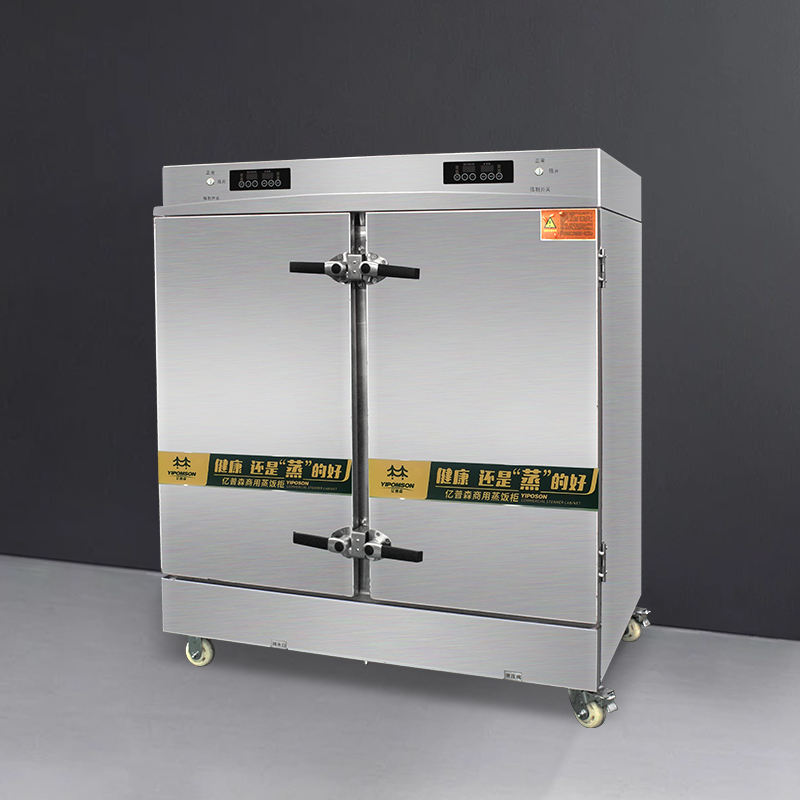
A commercial rice cabinet steamer isn't just about cooking rice—it's about improving workflow, saving time, and ensuring food quality. Unlike home cookers or improvised methods, these machines are built for high-volume, efficient rice steaming.
Benefits at a Glance:
-
✅ Even cooking every time
-
✅ Large capacity for bulk operations
-
✅ Energy and water-efficient options
-
✅ Faster turnaround with programmable features
-
✅ Compatible with multi-food steaming
1. Determine Your Cooking Volume
? Keyword: High-capacity rice steamer
Start by asking: How much rice do you need to cook daily? A small food stall may only need to steam 10–20 liters per day, while a large hotel kitchen may require 100 liters or more.
Common options:
-
6-tray steamers (small restaurant or food truck)
-
12-tray steamers (medium restaurants, canteens)
-
24-tray or larger (institutions, catering services)
Tip: Always choose a model that exceeds your average demand. It’s better to have extra capacity than to fall short during peak hours.
2. Electric vs. Gas: Choose Your Energy Source
? Keyword: Electric rice steamer
? Keyword: Gas rice steamer
Electric steamers are common in indoor kitchens with limited gas supply. They are:
-
Easy to install
-
Quiet and clean
-
Ideal for small-to-medium operations
Gas-powered steamers, on the other hand, are:
-
Faster to heat
-
Lower operational cost (in many countries)
-
More powerful—great for large volumes
Hybrid or dual-fuel options may also be available for flexibility.
3. Material and Build Quality
? Keyword: Stainless steel rice steamer
Choose models made from 304 or 201-grade stainless steel, as they:
-
Resist corrosion and high temperatures
-
Are easy to clean
-
Meet hygiene standards for commercial kitchens
Avoid aluminum or mixed-metal options, which may warp over time or rust.
Also check for:
-
Reinforced door hinges
-
Double-layer insulation
-
Water-proof control panels
4. Smart Features That Make a Difference
? Keyword: Digital control rice steamer
? Keyword: Automatic rice steaming machine
Modern steamers come with features that can improve kitchen efficiency:
| Feature | Benefit |
|---|---|
| Digital timers | Prevent overcooking, reduce supervision |
| Water level alarms | Avoid dry-burning or system damage |
| Programmable memory | Set recipes for different dishes |
| Automatic shut-off | Enhances safety |
| Temperature control | Keeps rice warm without over-steaming |
These features are especially helpful in busy kitchens with less-experienced staff.
5. Steam Type: Direct Injection vs. Evaporation System
? Keyword: Evaporative commercial rice steamer
There are mainly two types of steaming systems:
-
Direct Steam Injection
Requires a boiler or external steam source. Fast, but more complex and costly.
Best for large facilities. -
Evaporative System
Uses internal water heating to produce steam. Easier to install and maintain.
Ideal for small-to-medium operations.
If you’re running a stand-alone restaurant or catering unit, the evaporative rice steamer is often the more practical choice.
6. Safety and Certifications
Ensure the machine complies with local electrical or gas safety codes. Look for:
-
CE, ETL, NSF, or ISO certifications
-
Built-in safety valves
-
Anti-dry burning protection
-
Insulated handles and door seals
Important: Proper safety not only protects staff but also avoids legal trouble and downtime.
7. Water Supply: Manual Fill or Direct Connect?
Some models require manual water filling, while others connect directly to your water line.
Direct-connect models are better for high-volume kitchens, ensuring uninterrupted steam supply.
Manual fill models are cheaper but require more staff attention.