Guangdong Yipomson Electric Co., Ltd.
Email: caroline@yipomson.com

Hot Categories
How do thermal food trucks solve the ″last mile″ temperature control problem?2026-10-12
Company News | 2025-03-30 10:01:00
From hotels to fast food chains: How do thermal food trucks solve the "last mile" temperature control problem?
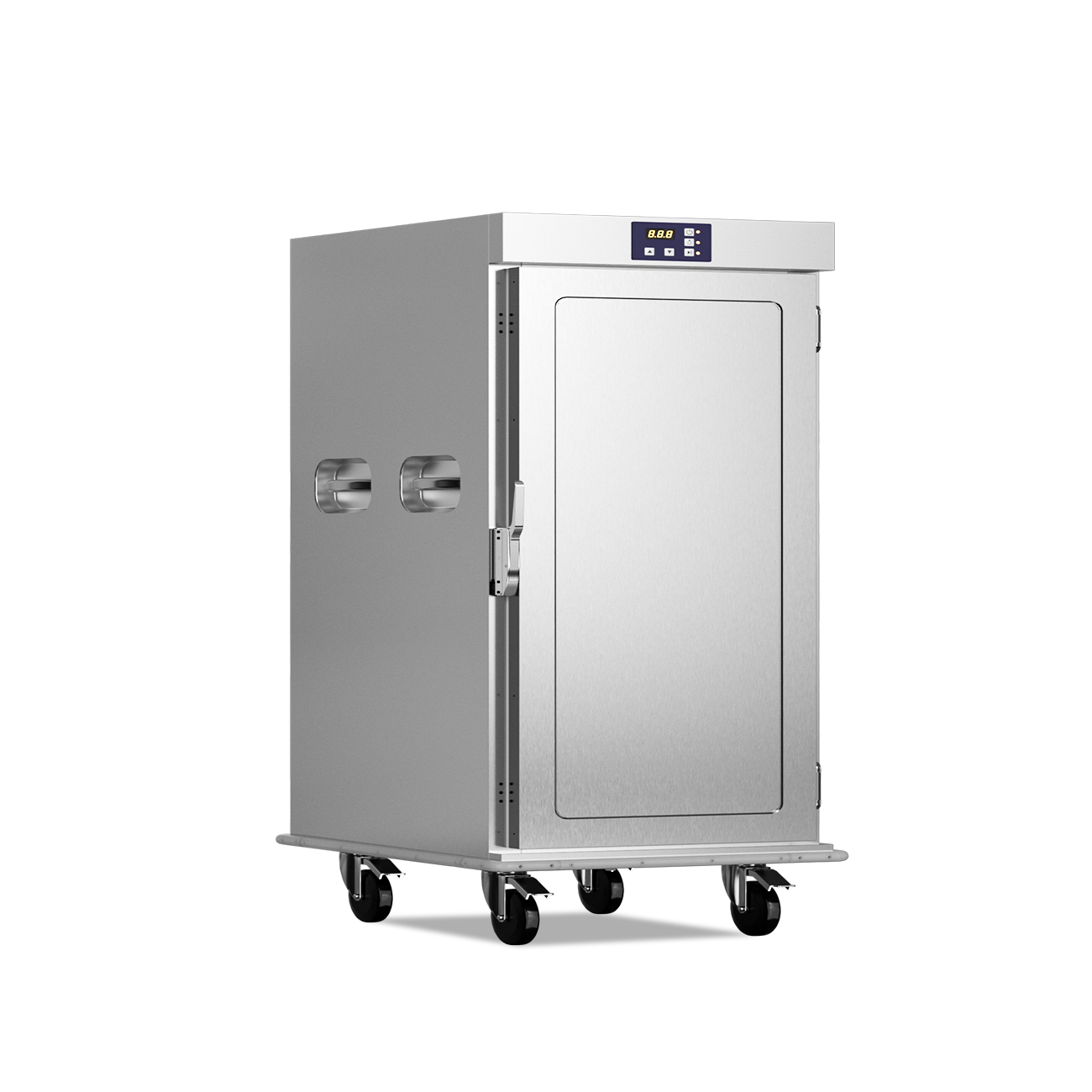
1. Chain restaurant scene
Pain points:
Chaotic meal delivery during peak hours: When sit-down + takeout orders are concentrated, food accumulation leads to temperature loss.
Cooling of takeaway delivery: The temperature in transit after the rider picks up the food decreases, and the negative rating rate increases.
Low space utilization: the traditional thermal insulation table occupies a large area, and the small restaurant cannot be flexibly arranged.
Solution:
Stratified temperature control dining car:
Upper layer (60 ° C to 70 ° C) : Store the food to be taken and avoid secondary heating.
Lower layer (40 ° C ~50 ° C) : The takeaway food is temporarily stored to prevent condensation from affecting the taste.
Case study: A Chinese fast food chain reduced the bad rating rate of takeout by 25% by layering food trucks.
Mobile design:
With the trolley with the "assembly line meal", the waiter can push to the packaging area at any time to shorten the transmission distance.
2. Hotel banquet scene
Pain points:
Large banquet dishes are not hot or cold: the interval from the starter to the main course is long, and the dishes become cold in the later period.
Health risks: Traditional heat preservation methods (such as alcohol stove) have the risk of open flame, and can not accurately control the temperature.
Solution:
Modular insulated dining car:
Independent temperature area: storage of cold dishes, hot dishes and soups (0 ° C ~5 ° C, 70 ° C, 85 ° C respectively).
Transparent dust cover: display dishes while avoiding pollution, suitable for high-end hotel buffets.
Case: After the use of the hotel wedding reception, the customer complaint rate dropped by 30%.
Electric constant temperature system:
Replace the open flame heating, maintain ±1℃ fluctuation through PID temperature control chip, in line with fire protection regulations.
3. Central Kitchen & Group meal scene
Pain points:
Loss of temperature in bulk delivery: food from the central kitchen to the school/factory, the end temperature is not up to standard.
High cost of multi-batch distribution: frequent round trip heating replenishment.
Solution:
High endurance insulated dining car:
12 hours of continuous heat preservation (vacuum insulation + phase change material) to meet the one-time delivery needs of group meals.
GPS temperature monitoring: Upload data to the cloud in real time to ensure food safety traceability.
Case: A school canteen catering company saves 2 deliveries per day, saving 150,000 yuan per year.
4. Airport/high-speed train fast food scene
Pain points:
High passenger flow and fast turnover: Passengers have fragmented dining time and need to provide hot meals at any time.
High equipment stability requirements: frequent opening and closing lead to large temperature fluctuations in the traditional dining car.
Solution:
Rapid temperature recovery technology:
Return the temperature to the set value within 3 minutes after opening the door (enhanced heating element + air circulation design).
Wear resistant material:
The stainless steel housing is anti-collision, and the hinge structure has been tested by 100,000 switches and is suitable for high-strength use.