Hot Categories
Gas Hot Plate Usage Environment2026-10-12
Company News | 2025-04-26 08:46:00
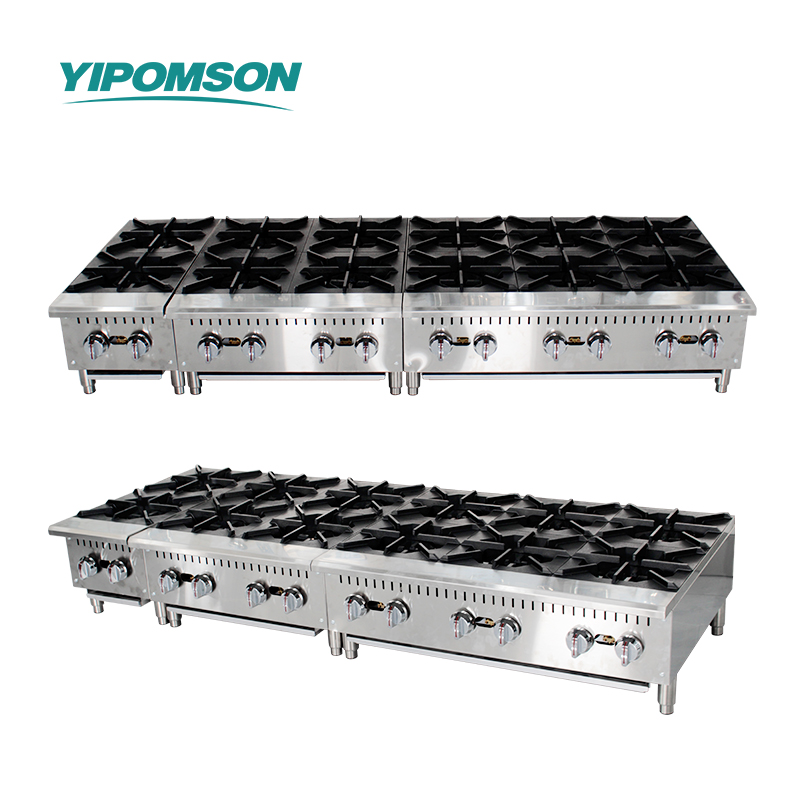
1. Usage Environment:
A gas hot plate (or clay pot stove) is designed for high-heat cooking, especially for preparing clay pot dishes, stews, soups, and stir-fries. It is commonly used in:
-
Commercial kitchens (restaurants, canteens, food stalls) for bulk cooking.
-
Outdoor settings (catering events, street food vendors) due to its portability.
-
Home kitchens (for enthusiasts of traditional clay pot cooking).
-
Well-ventilated areas, as it requires proper airflow for gas combustion.
2. Styles & Designs:
Gas hot plates come in various styles to suit different needs:
-
Single Burner – Compact, ideal for small-scale cooking or home use.
-
Double Burner / Multi-Burner – Used in restaurants for simultaneous cooking (e.g., 2–6 burners).
-
Portable (Tabletop) Models – Lightweight, easy to move; great for outdoor events.
-
Built-in (Countertop) Models – Fixed installation for professional kitchens.
-
Adjustable Flame Control – Allows precise heat adjustment for slow cooking or searing.
-
Stainless Steel Body – Durable, rust-resistant, and easy to clean.
-
Cast Iron Grates – Provides stability for heavy clay pots and woks.
Ideal For:
✔ Clay pot rice
✔ Simmering soups & stews
✔ High-heat stir-frying
✔ Catering & buffet setups
This versatile stove combines efficiency, durability, and traditional cooking methods, making it a favorite in both professional and home kitchens.
Market Development Trends of Gas Hot Plates in Southeast Asia
The gas hot plate market in Southeast Asia is experiencing steady growth, driven by food culture, urbanization, and the expansion of the food service industry. Below are key trends shaping its development:
1. Market Drivers
① Rising Demand from Food Service Sector
-
Street food & hawker stalls: Gas hot plates are essential for cooking clay pot rice, stir-fries, and noodle dishes, which remain popular across the region (e.g., Thailand, Malaysia, Vietnam).
-
Restaurants & hotels: Increasing demand for efficient, high-heat cooking equipment in commercial kitchens.
-
Catering & cloud kitchens: Growth of food delivery services boosts demand for compact, high-performance stoves.
② Urbanization & Changing Lifestyles
-
More consumers eat out or order in, increasing the need for commercial kitchen equipment.
-
Home cooking enthusiasts invest in portable gas stoves for traditional dishes (e.g., clay pot rice in Singapore, nasi lemak in Malaysia).
③ Tourism & Culinary Trends
-
Southeast Asia’s thriving street food culture (e.g., Bangkok’s night markets, Singapore’s hawker centers) sustains demand for durable, low-cost stoves.
-
Growing popularity of Asian cuisine globally encourages restaurant expansion, further driving equipment sales.
2. Key Market Trends
① Shift to Energy-Efficient & Multi-Functional Models
-
Manufacturers are introducing LPG/NG dual-fuel stoves to adapt to local gas supply conditions.
-
Induction hybrid models (gas + electric) are emerging in premium markets (e.g., Singapore) for cleaner cooking.
② Increased Focus on Safety & Durability
-
Auto shut-off valves & flame failure protection are becoming standard due to stricter safety regulations.
-
Stainless steel & corrosion-resistant materials are preferred for humid climates.
③ Expansion of Local & Chinese Brands
-
Chinese manufacturers dominate the mid-range market with affordable, high-output models.
-
Local brands (e.g., Malaysia’s Pensonic, Thailand’s Tiger) compete with customized designs for regional cooking styles.
④ E-Commerce & Distribution Growth
-
Online platforms (Shopee, Lazada, Tokopedia) make gas hot plates more accessible to small vendors.
-
Restaurant supply chains are expanding in Vietnam, Indonesia, and the Philippines due to rising F&B investments.
-
3. Challenges
-
Regulatory hurdles: Some countries enforce strict gas safety certifications, increasing compliance costs.
-
Competition from induction stoves: Electric models gain traction in urban areas with stable power supply.
-
Price sensitivity: Small vendors prefer low-cost, traditional stoves over advanced models.
4. Future Outlook
-
Sustained growth in Vietnam, Indonesia, and the Philippines due to booming food sectors.
-
Smart stoves with IoT features (e.g., temperature control via app) may emerge in premium markets.
-
Sustainability trends could push demand for biogas-compatible models in rural areas.
Conclusion
The Southeast Asian gas hot plate market will continue expanding, supported by street food culture, commercial kitchen growth, and technological upgrades. Manufacturers should focus on safety, energy efficiency, and affordability to capture this diverse and dynamic market.
-